Brest Fortress
Brest Fortress is one of the most important places to see in Belarus and by far the largest tourist attraction in Brest.
The fortress was not rebuilt at the end of the war, but instead became a shrine to the terrible and heroic events that took place there.
The entry of the fortress represents a huge star cut into a concrete block. The radio announcer informs about the invasion of the German army.
As you walk up to the centre of the fortress you see "Thirst", a large monument depicting an injured soldier trying to get some water from the river. The monument reflects the bravery of the last remaining soldiers who defended the Fortress for many days without food or water.
The main part of the memorial is the Square of Ceremonies, leading to the Museum of the Defence of Brest fortress and the ruins of the White Palace.
The Bayonet Obelisk, 100m high, can be seen from any part of the fortress, and is linked to the main Courage monument by 3 rows of tombstones. Only 216 of the 850 defenders who died here are known.
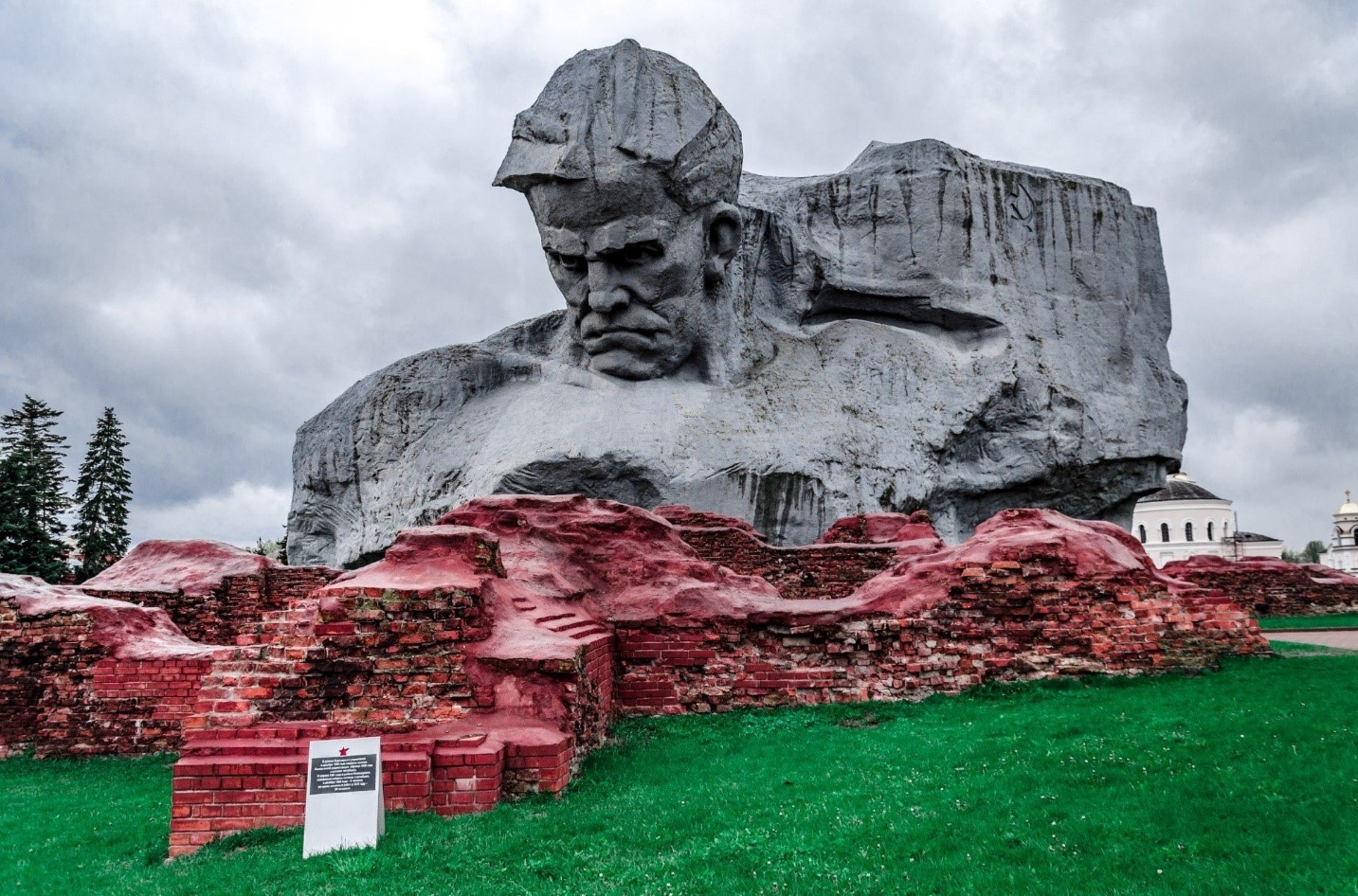
The Courage monument stands 33.5m high and tells the story of the heroic defence of the fortress through a series of carvings. There is an eternal flame which is guarded by 4 teenagers from the Pioneers Corps.
There is an Eternal Fire in front of the remnants of the former engineering department.
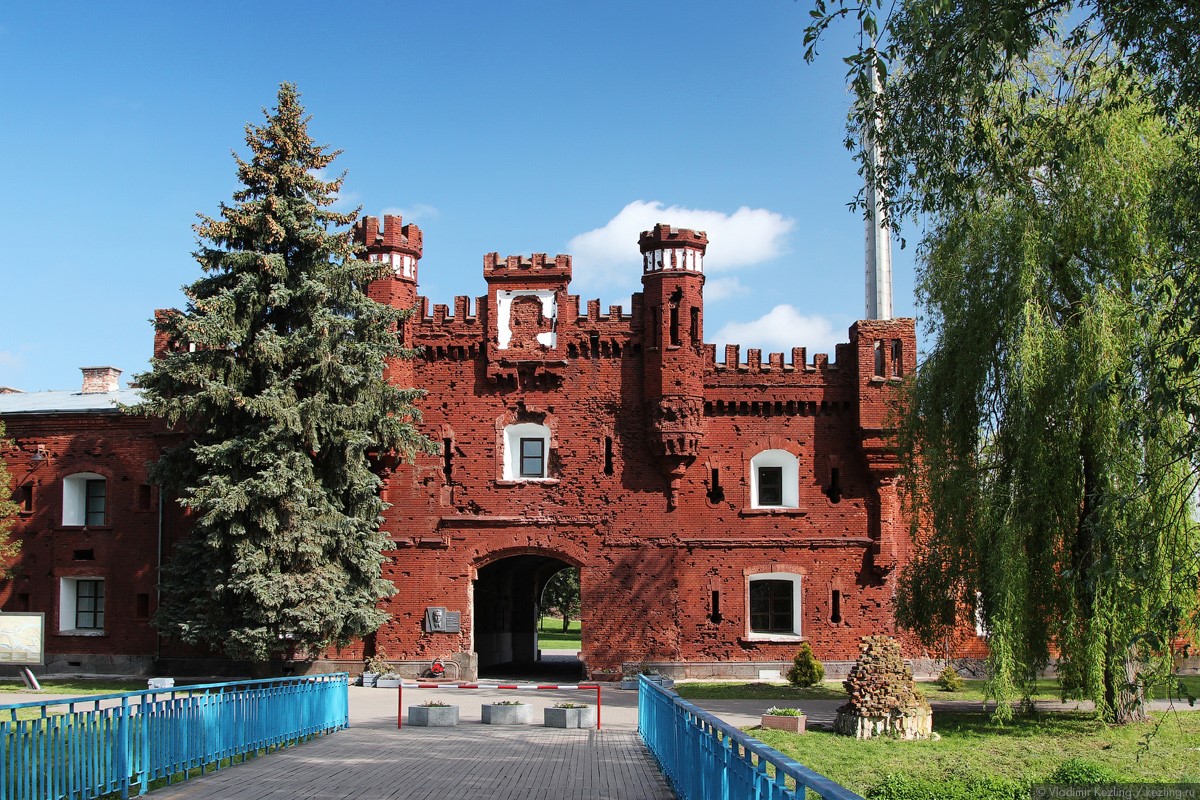
Further in to the Fortress you will find the iconic Kholmsky Gate, with its bullet-riddled walls.
Getting to Brest Fortress and where to stay:
- Brest Fortress is best reached on foot. It is about a 30-minute walk from the centre of Brest.
- Alternatively there is an hourly bus service from the town.
- Whilst you are visiting Brest Fortress you can stay in one of the many Brest hotels, which cater for a wide range of tastes and budgets.